
Eternity at Sea
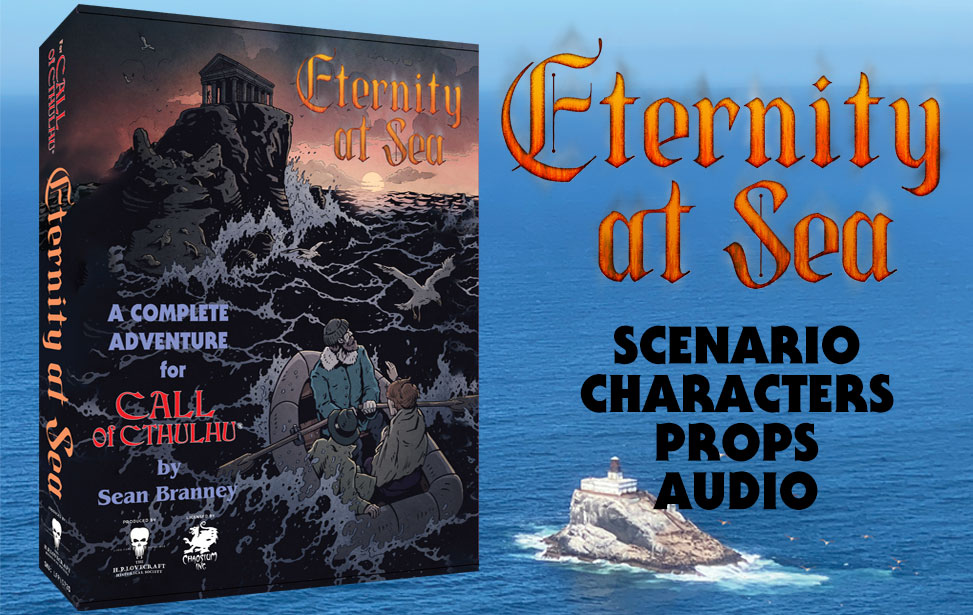
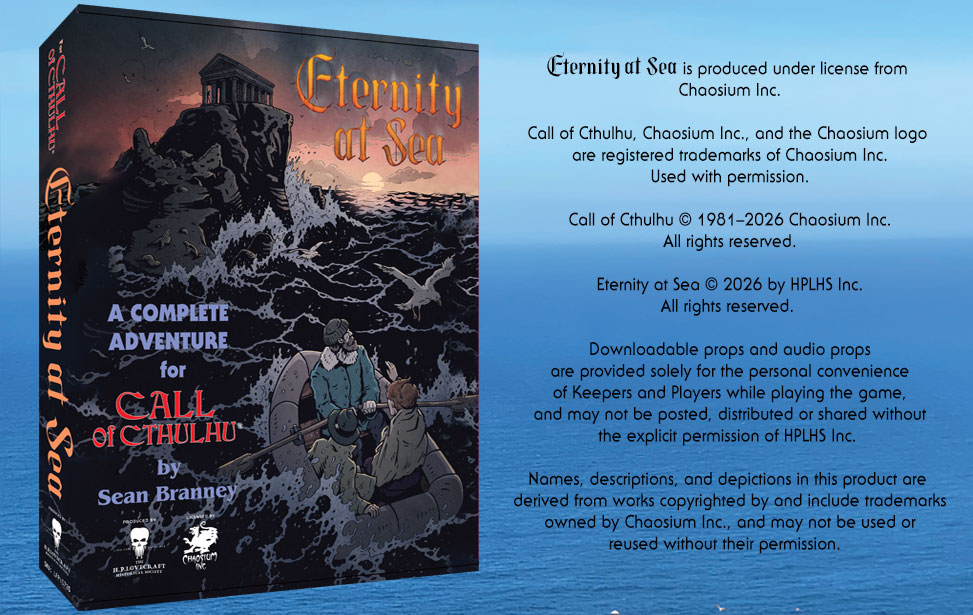
This adventure is an original scenario written by the HPLHS' Sean Branney with a set of props created by Andrew Leman. The adventure is set in and around Astoria, Oregon in 1925, and a fictionalized version of the nearby landmark known as Tillamook Rock. The game comes with a set of architectural models of three key story locations that the Keeper can build in advance using just a bit of glue or double-sided tape. The models help players better understand the relationship between the spaces, and are compatible with standard scale miniature gaming figures, taking traditional gaming handouts literally into another dimension. The deluxe box set measures 10.75 x 13.25 x 2 inches and weighs about two pounds, containing everything you need to play. While the game is designed to be played in-person around the table, we are also providing digital versions of most of the props so you can play remotely/online!
In addition to cinema-quality physical props, the adventure comes with a collection of professionally-produced audio props. These downloadable MP3 files can be played through any convenient audio device to bring you interactions with multiple NPCs and locations.
Contents
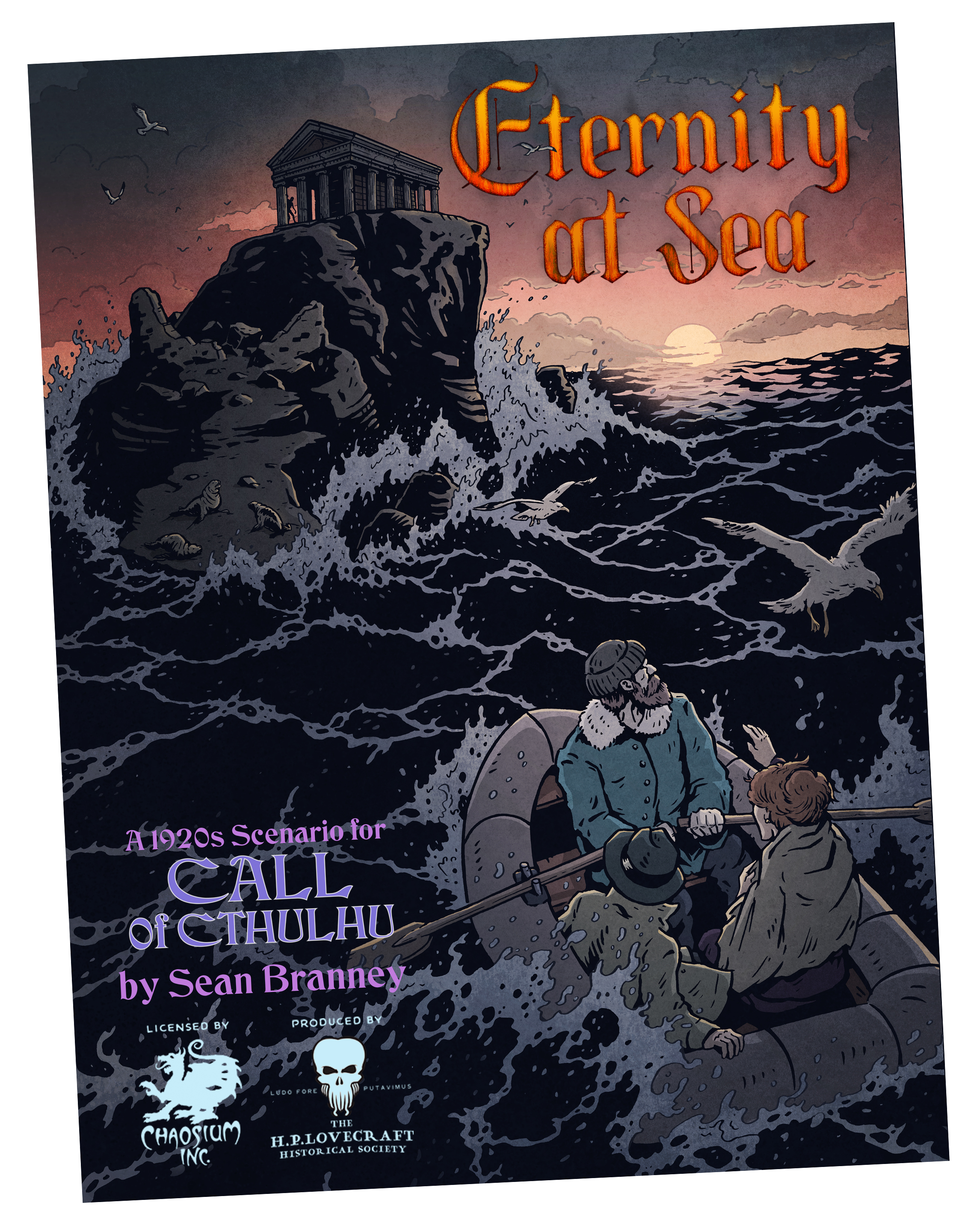 The scenario itself is presented in a 56-page perfect-bound book with cover art and interior illustrations by Ukrainian artist Vladyslav Yurasov. The book is further illustrated with images of all the props, historical photographs and more, including a number of sidebars to give Keepers even more resources for running the game.
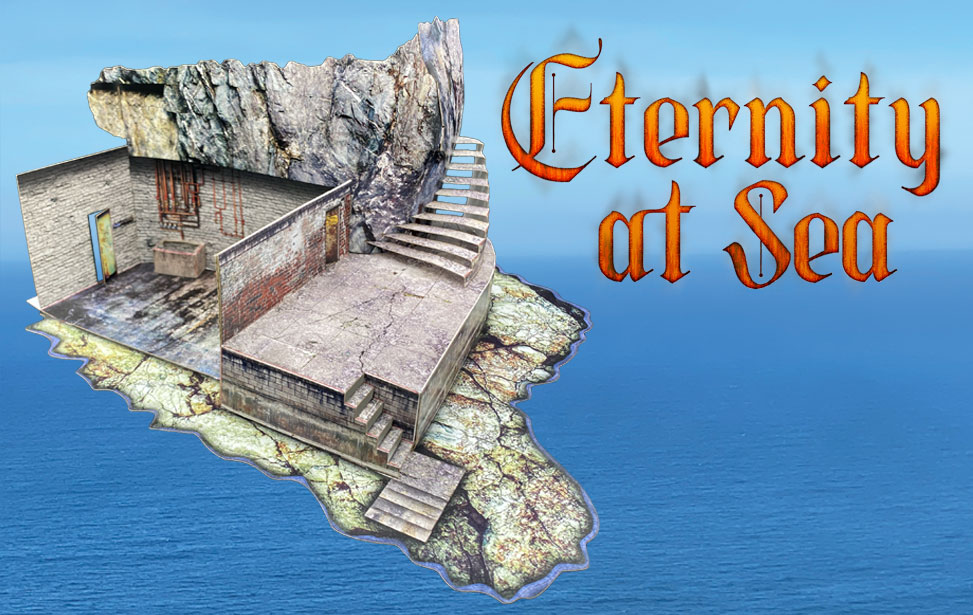
 It is common to provide gaming handouts showing floor plans of story locations, but the nature of some of the locations in this story suggested a different approach. We have prepared three architectural models, provided as kits for the Keeper to build in advance of play. Showing them in detail is a potential spoiler, so if you are expecting to participate in this game as an Investigator, you might want to look away for the time being.
Use of the models takes the traditional gaming floor plan and extends it into three dimensions, giving Investigators a more immersive experience of the story locations.
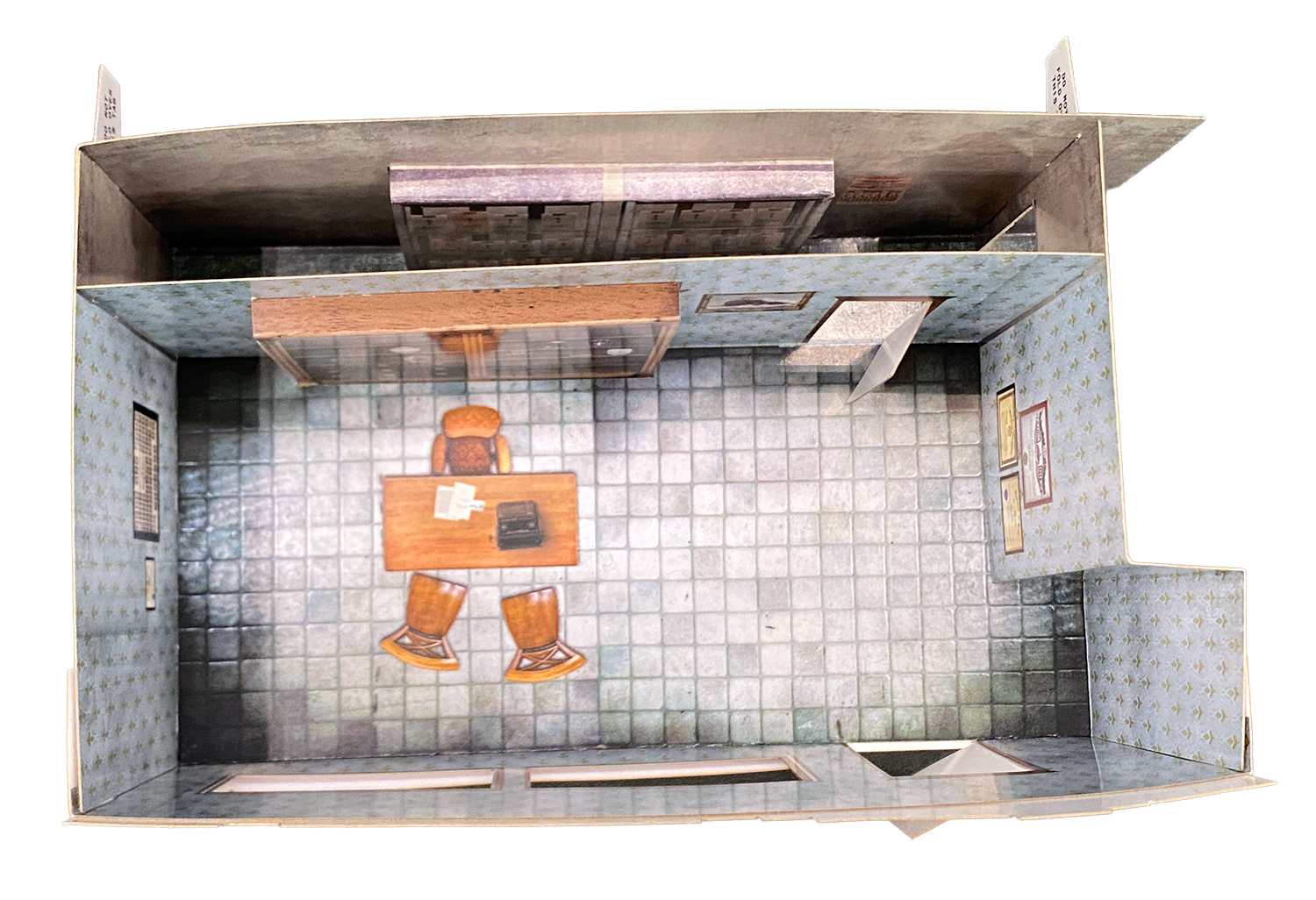 This is a "pop-up" model of the office of Eternity at Sea, showing the back hall and doorway to the cellar. Complete instructions for assembling the model are packaged with the game, and there is a tutorial video available on the Eternity at Sea downloads page. We highly recommend watching the video and/or reading the instructions before attempting to put the model together. It's not hard to do, but it will be even easier if you utilize the instructions.
This model, once assembled, is 7 inches wide, 4 inches deep, and 3.5 inches high.
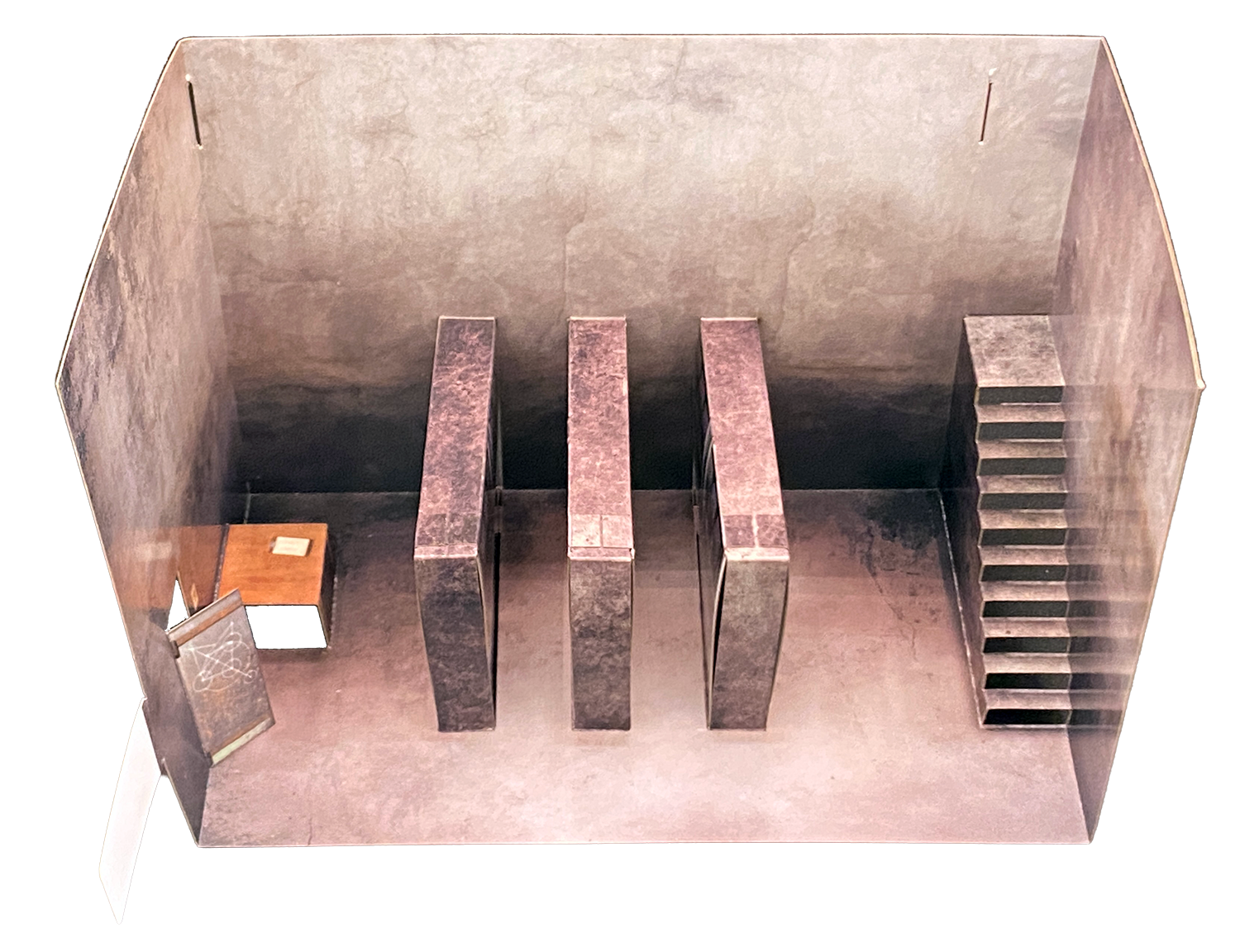 This "pop-up" model shows the stairway and cellar of Eternity at Sea. The stairway can look complicated, but it actually almost assembles itself if you watch the instructional video. We have provided a practice set of stairs in the model kit so you can get the hang of it before attempting the real thing.
This model is designed to attach to the model of the Eternity at Sea office by means of two tabs at the back. When conjoined, they provide a full 3D representation of the space.
This model, once assembled, is 7 inches wide, 4 inches deep, and 5 inches high.
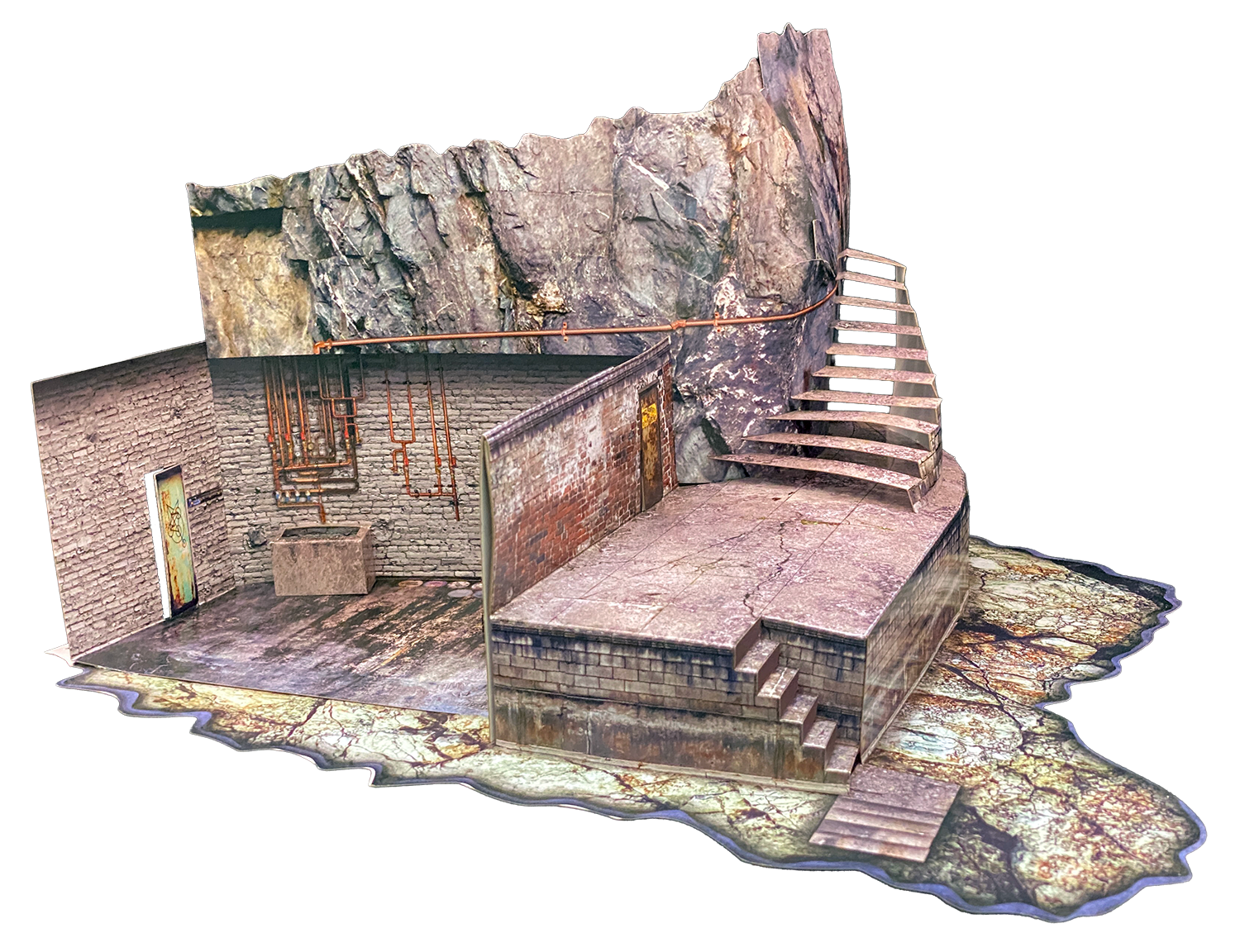 This "pop-up" model shows the crypt beneath the ruined lighthouse on Terrible Tilly, and the stairs leading up to the columbarium at the top of the rock.
This model features three sets of stairs, and they can be slightly more tricky to erect than the larger set in the cellar model, so using the practice stairs first can be helpful. We highly recommend watching the tutorial video before attempting to assemble this model. It is very much hoped that assembling these model kits is a bit of fun for the Keeper to have before the game begins.
This model connects to the Eternity at Sea cellar model by means of tabs and slots, and when correctly fitted together, the two doorways line up to provide the magical gate between the spaces that teleports the Investigators from downtown Astoria to Tillamook Rock. It is recommended that Keepers not allow their players to see the models until after they have already discovered the spaces during game play, since one glance at the models reveals spatial details that can be more effectively experienced slowly.
When all three models are connected, the entire spatial relationship of Elias Amole's dominion can be easily explored.
This model, once assembled, is 12 inches wide, 10 inches deep, and 6 inches high.
This section contains details that tend to reveal plot details about the game. If you are hoping to play Eternity at Sea as an Investigator, your gaming experience will be enhanced if you don't know too much ahead of time. Look away while you still can!
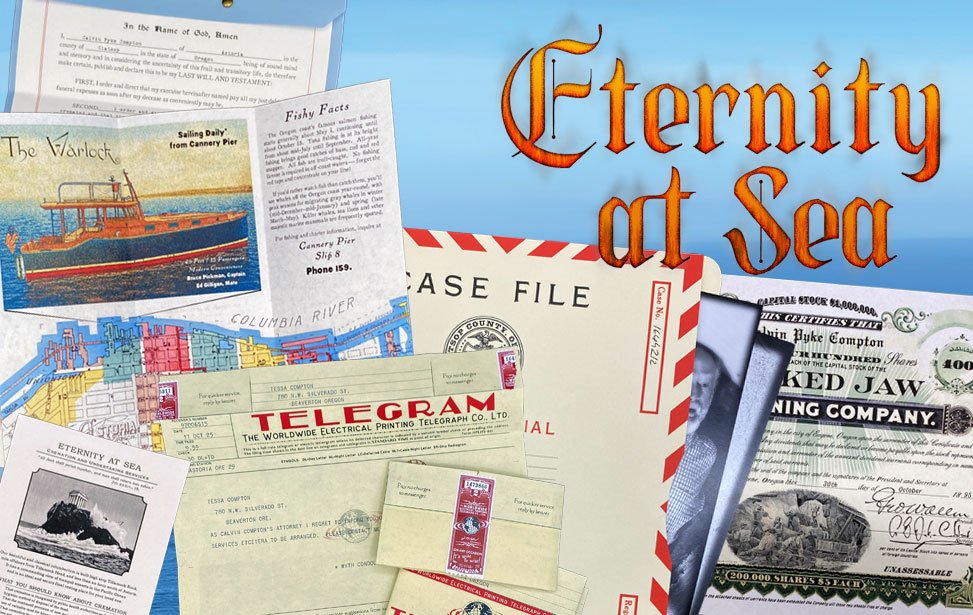
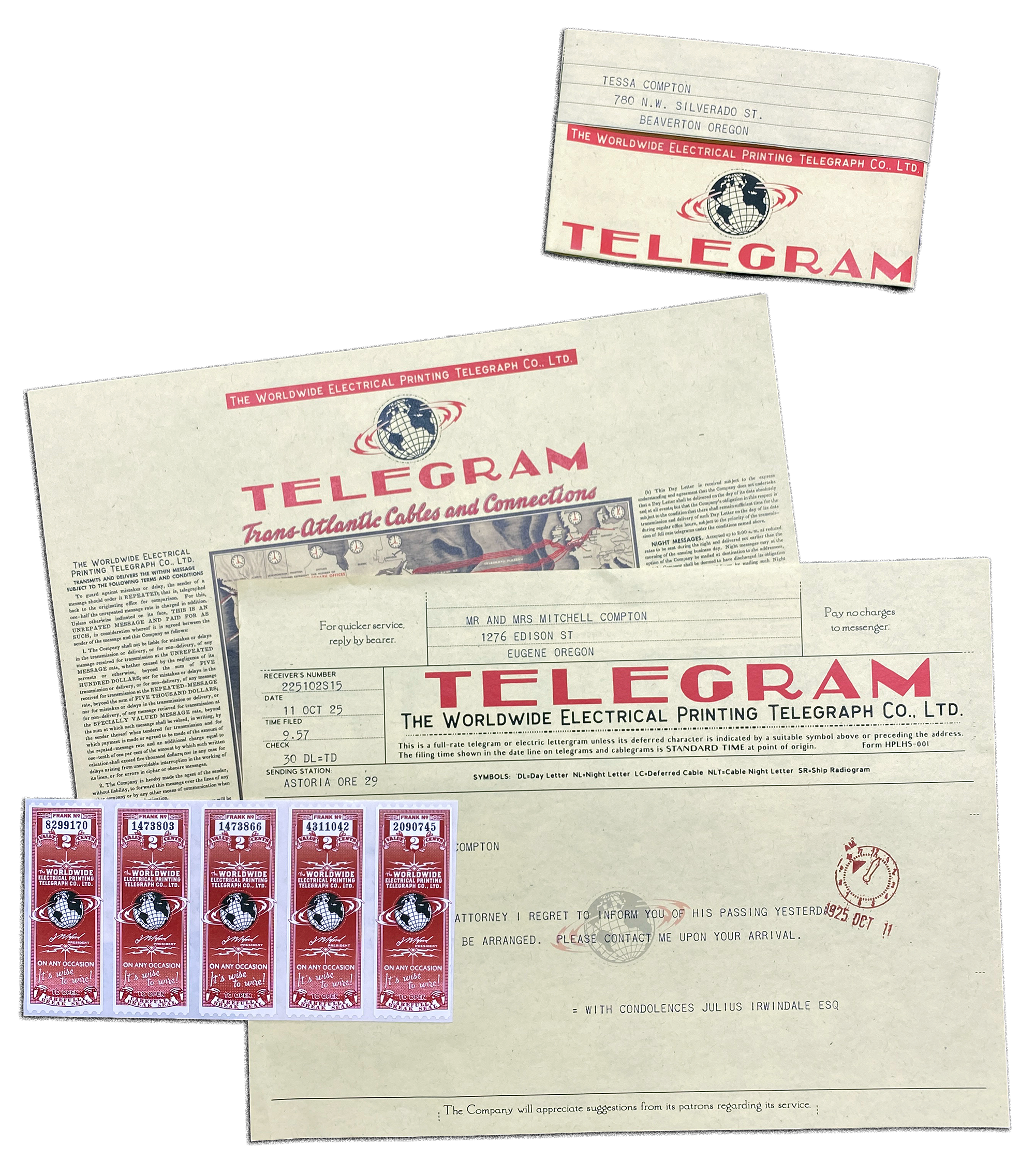 The game kicks off when each of the Investigators receives a telegram from a lawyer summoning them back to their family farm in Astoria. The telegrams are a self-folding design that are meant to be opened by breaking the seal, revealing both the message and a lot of telegram information printed on the reverse.
The box set comes with five prefolded and sealed telegrams, uniquely addressed to each Investigator household and ready to deliver, along with a duplicate set of unfolded telegrams and five seals so that Keepers can play the game a second time with fresh props. Additional telegrams can be ordered separately from the HPLHS as needed.
At their peak in 1929, an estimated 200 million telegrams were sent annually and they were a familiar form of communication. But since most people haven't gotten a real telegram since at least 1980, there is a tutorial video showing how to open them, and how to fold and seal them, on the Eternity at Sea downloads page.
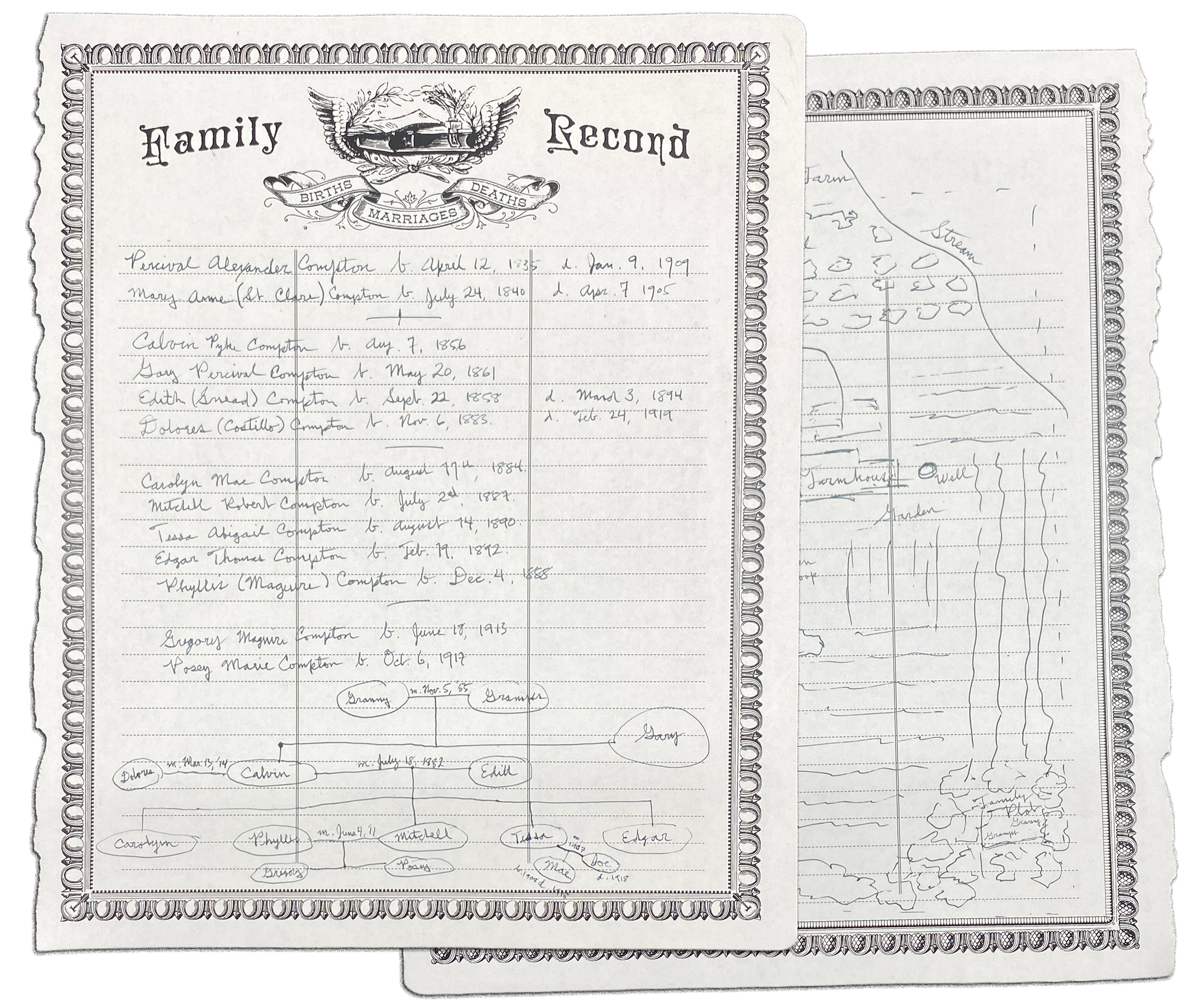 This prop is a page from the Compton family Bible, which is prominently displayed in Calvin's home. All of the Investigators are familiar with this book and it takes no special roll for them to see it. Although designed like other in-world props, it can be used like a handout, and simply given to the players to provide them with useful information. The prop contains a complete family tree and a sketch map of the farm. The family graveyard is shown on the map, and Investigators who notice it may get the idea of investigating it.
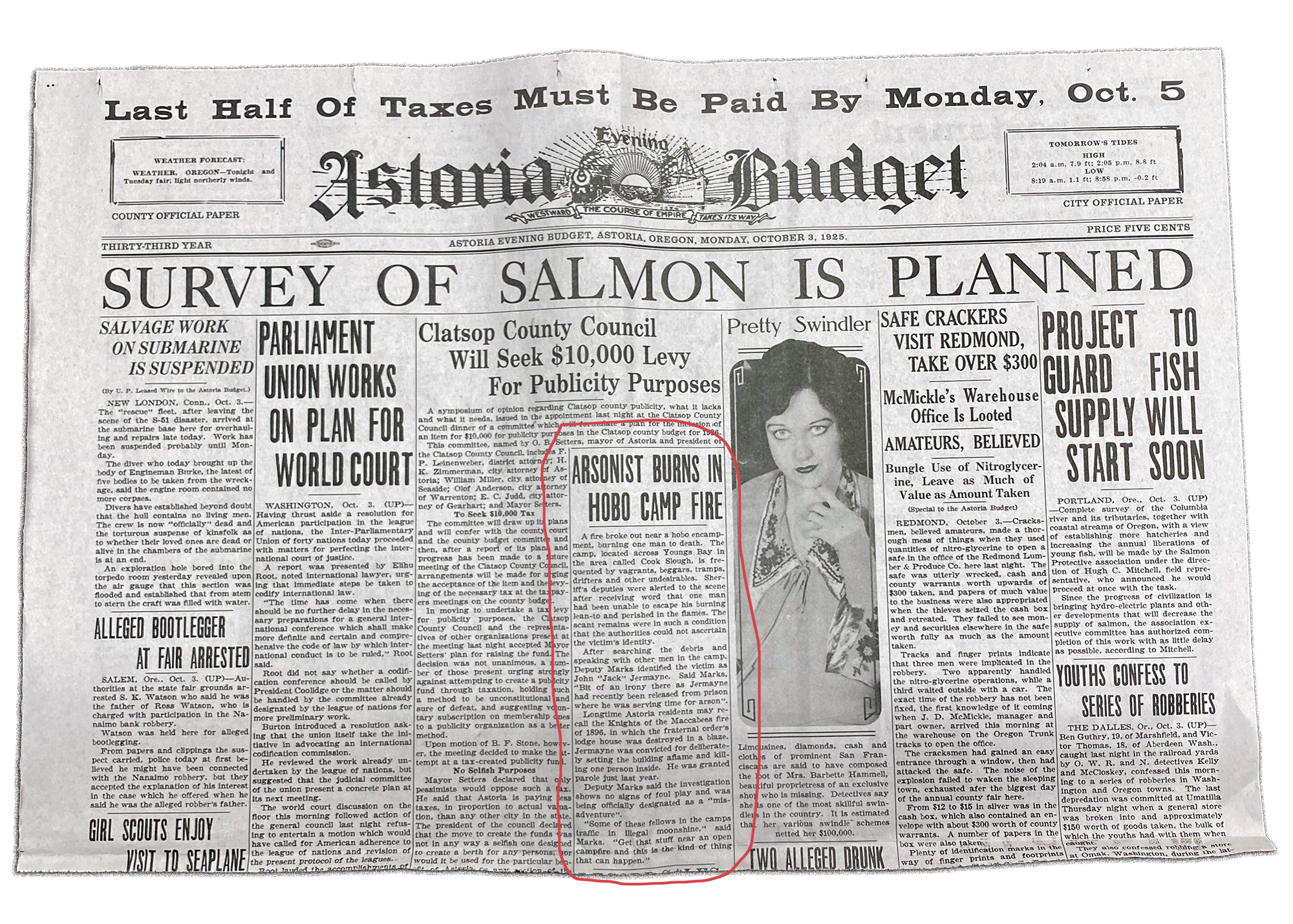 The box set comes with a U-Klip-It newspaper prop, consisting of four pages that the Keeper can cut apart to provide six newspaper clippings for the game. This item is the first of those six.
Sitting prominently on Calvin's desk is a copy of the Astoria Evening Budget for October 3, 1925. We are providing this entire half of the front page as a prop. The specific article of game import is the one circled in red in this photo. Rather than calling for a Library Use roll, Keepers who wish can give their players this entire newspaper page and let them find the clue for real. Keepers who prefer to speed things along can simply clip out only the directly relevant article and jettison all the context. The items surrounding the Hobo Fire article are all pulled from real Oregon newspapers of the day.
Although Astoria was never a large town, it nevertheless had multiple newspapers back in the 1920s. The Astoria Evening Budget began publication as a 4-page tabloid in the 1890s, and by 1925 was a full broadsheet paper that ran to 12 pages.
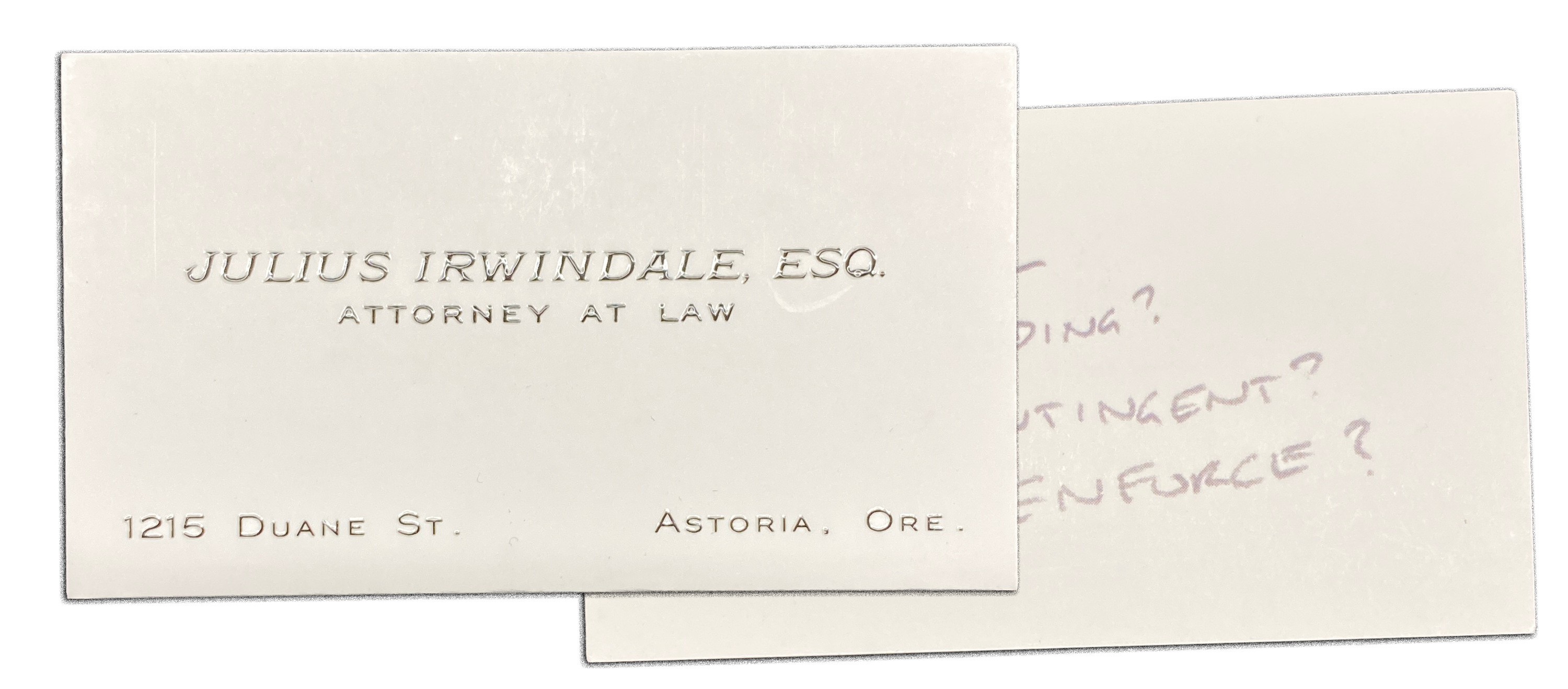 Also sitting prominently on Calvin's desk adjacent to the newspaper page shown above is this business card for Julius Irwindale, Esq., an Astoria lawyer. Players should recognize the name as the man who sent them the telegrams. In addition to his contact information, the back of the card contains some words in Calvin's handwriting which suggest he was struggling with some legal questions regarding his estate.
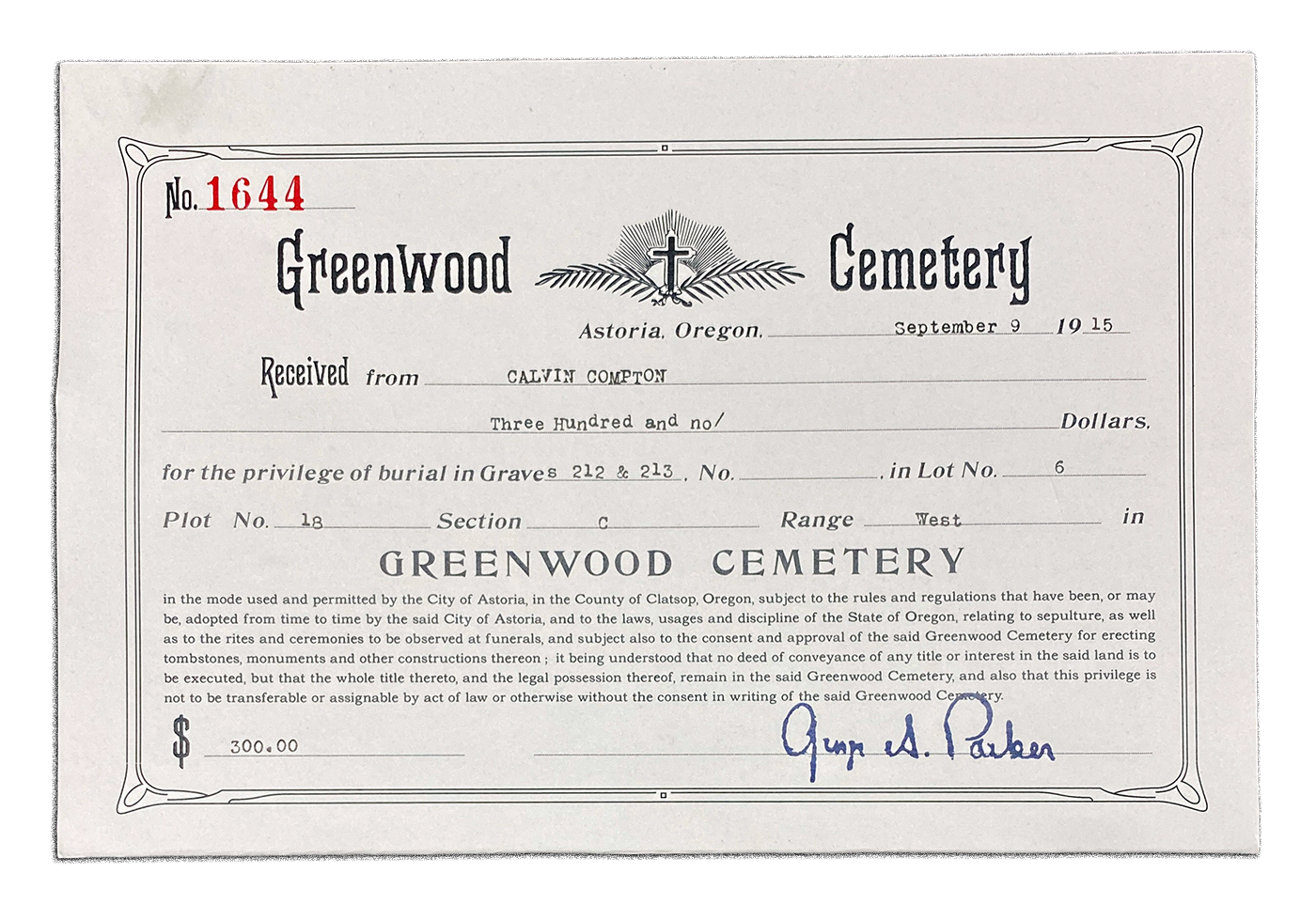 This receipt can be found with a successful Library Use roll among the many papers in Calvin's study. It shows that he did, in fact, originally intend to be buried in a traditional grave next to his wife.
This prop has been distressed to give it a greater sense of age.
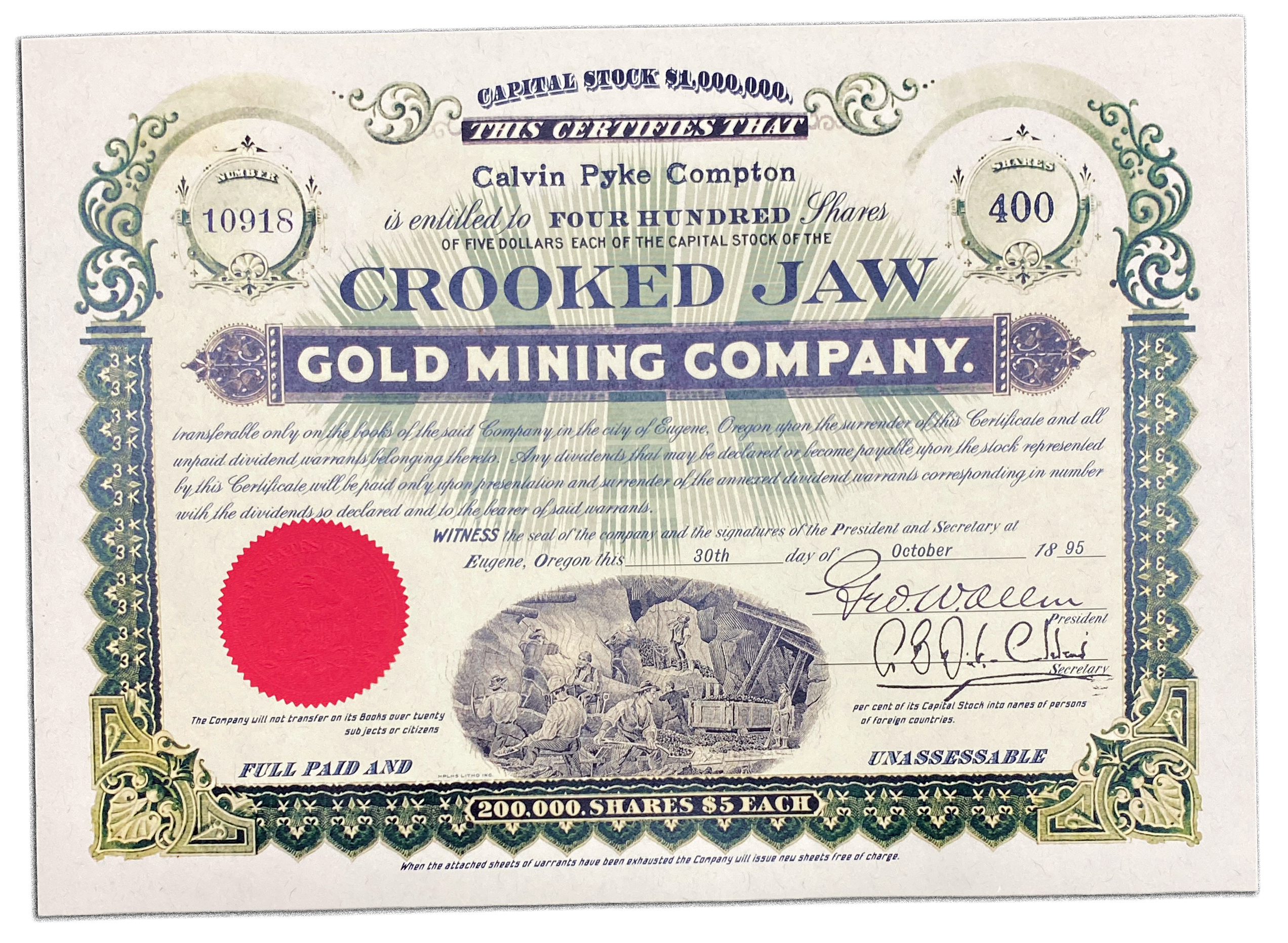 This prop can be found with a successful Library Use roll among the many papers in Calvin's study. It documents his 1895 purchase of 400 shares of stock in the Crooked Jaw Gold Mining Company, and provides quite a surprise to his family.
This prop is an amalgam of a few different real stock certificates of the day. Stock certificates are complex legal/financial documents, and for the sake of simplicity we have omitted some of the more technical details from this replica. Panning for gold remains a popular recreational activity in Oregon.
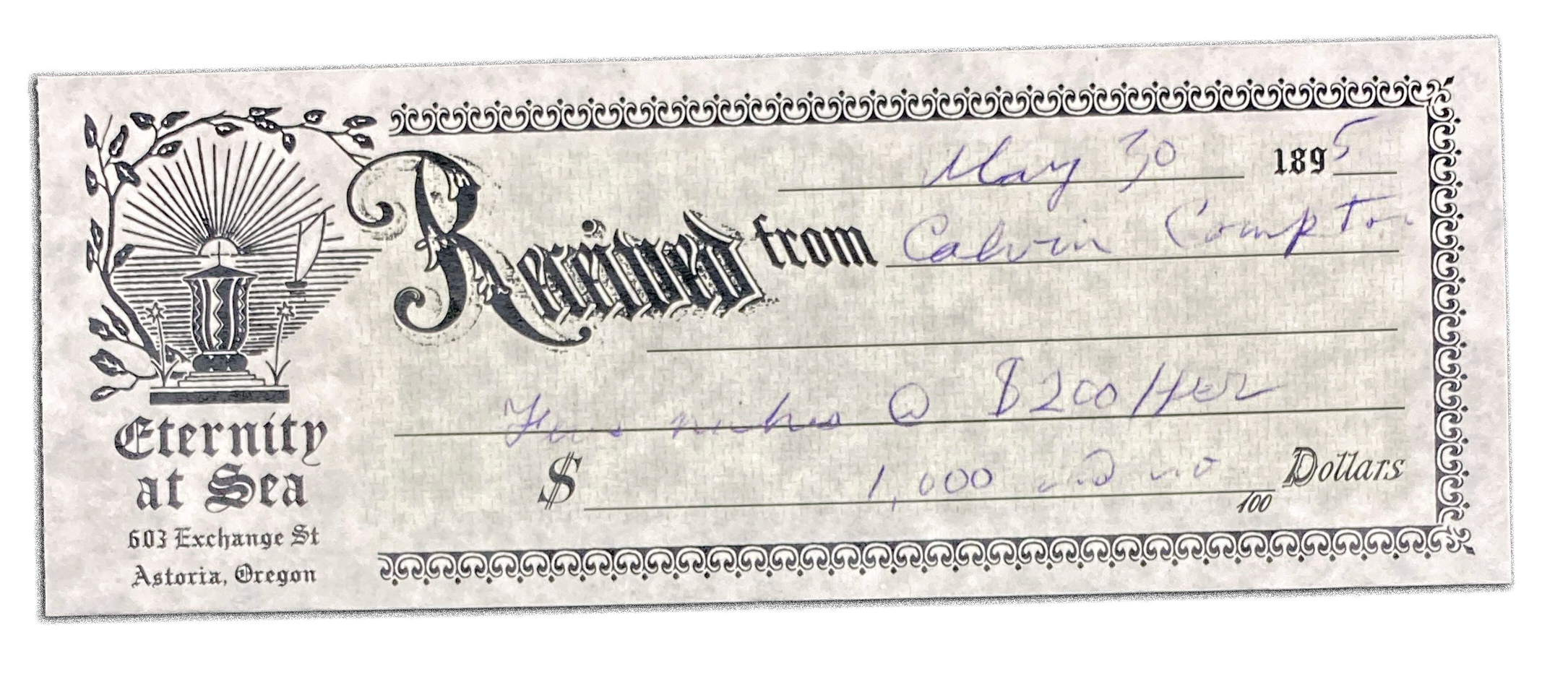 A carbon-copy receipt for a payment made to Eternity at Sea, Inc. in the amount of $1,000. The receipt is dated May 30, 1895 and provides an address of 603 Exchange Street, Astoria, Oregon. This item is among the many papers on or in Calvin’s desk, and can be discovered with a successful Library Use roll.
$1,000 in 1895 is roughly the equivalent of $40,000 today. For context, the cost of a memorial cremation today begins at around $5,000. Eternity at Sea isn't cheap, and the surviving Comptons might well be shocked not only by the dollar amount shown on this receipt but also by the fact that it specifies five niches. Who else was Calvin planning to cremate?
This prop has been distressed to give it a greater sense of age.
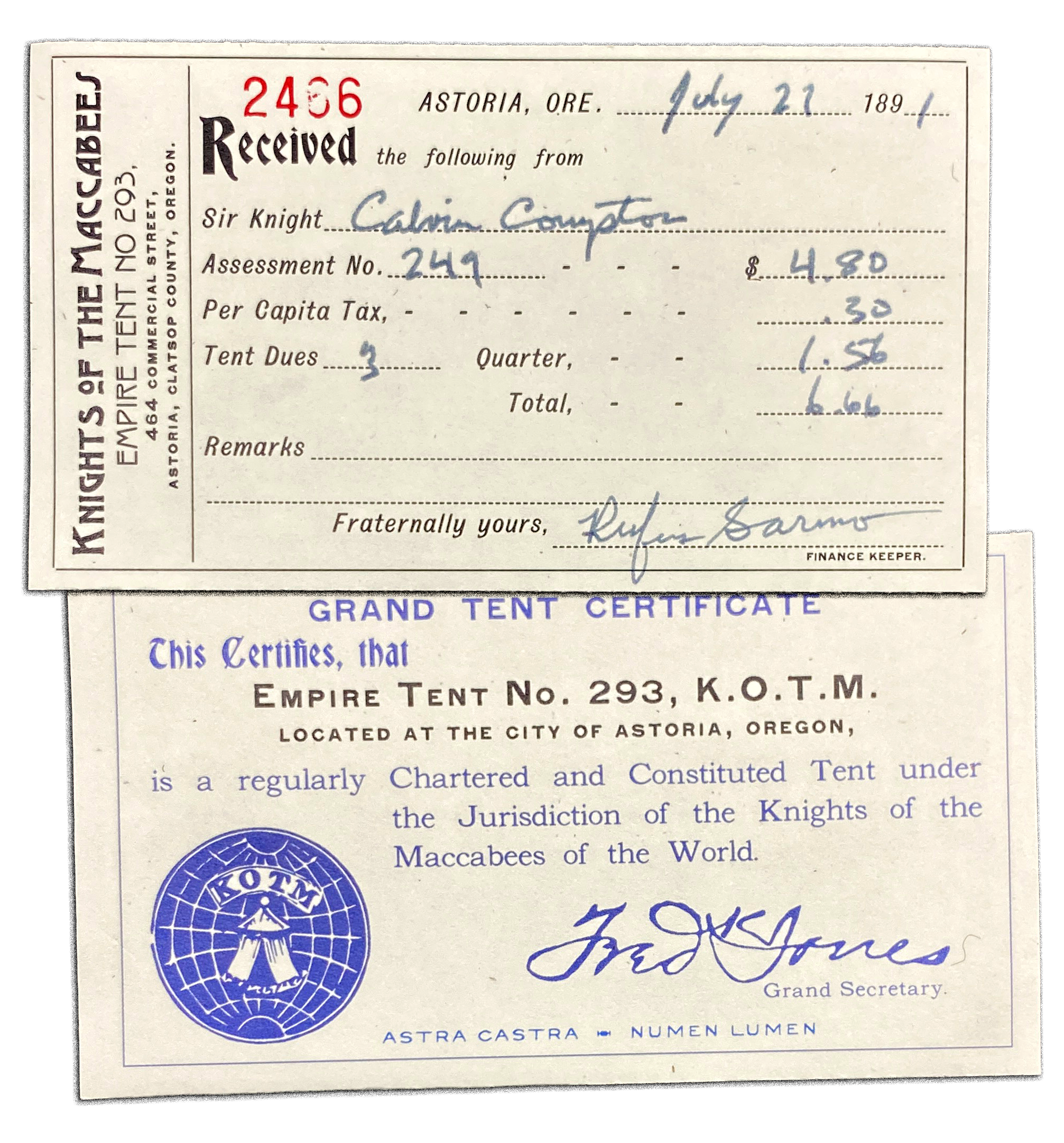 A receipt for payment of dues to The Knights of the Maccabees. It is dated July 27, 1891 and has an address of 464 Commercial Street, Astoria. This item is among the many papers on or in Calvin’s desk, and can be discovered with a successful Library Use roll. In 1925 that address is another place entirely.
Calvin's brother and older children might remember him belonging to this organization, but he seldom mentioned it in later years. The Knights of the Maccabees was a real fraternal organization and was still going strong in 1925, headquartered in Detroit. Our fictional Astoria tent never reopened after the tragic fire of 1896. The real organization transitioned into being just an ordinary life insurance company starting in the 1960s, and has long been defunct as a fraternal society.
This prop has been distressed to give it a greater sense of age.
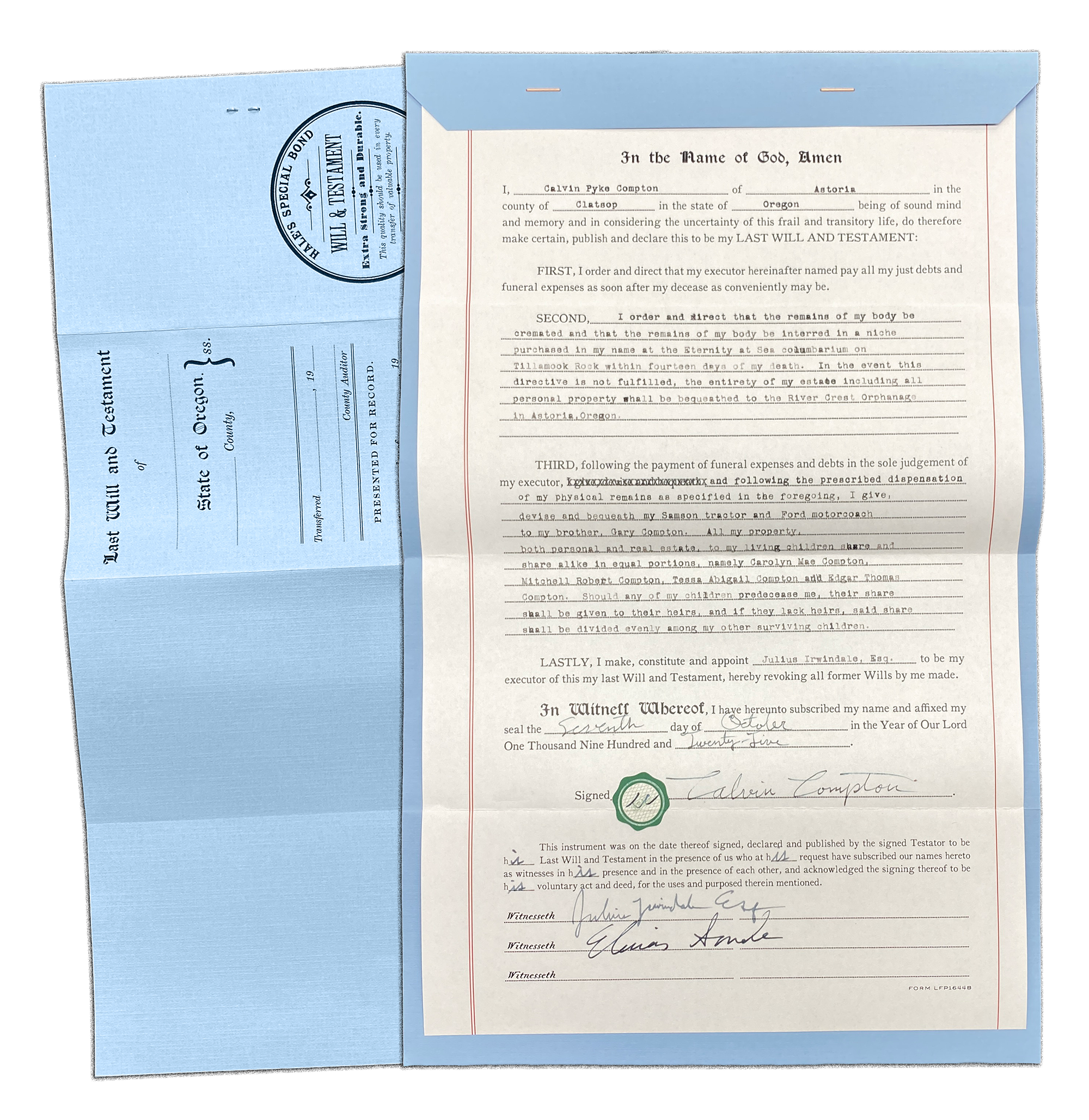 Any will Calvin Compton may have had before has been superceded by this freshly drafted document, signed and sealed just days before his death with the legal assistance of Julius Irwindale, and witnessed by Elias Amole. The terms of the will are surprising and a little sketchy, and the central dilemma of the Investigators is to understand it and decide whether or not to abide by it.
The document itself is in a standard format, although drawn up in some haste. Julius Irwindale will let the Investigators examine it in his presence, but he will insist on taking it with him to file with the Clatsop County Probate Court.
The contents of the will are read aloud in their entirety by Irwindale in Audio Prop 2.
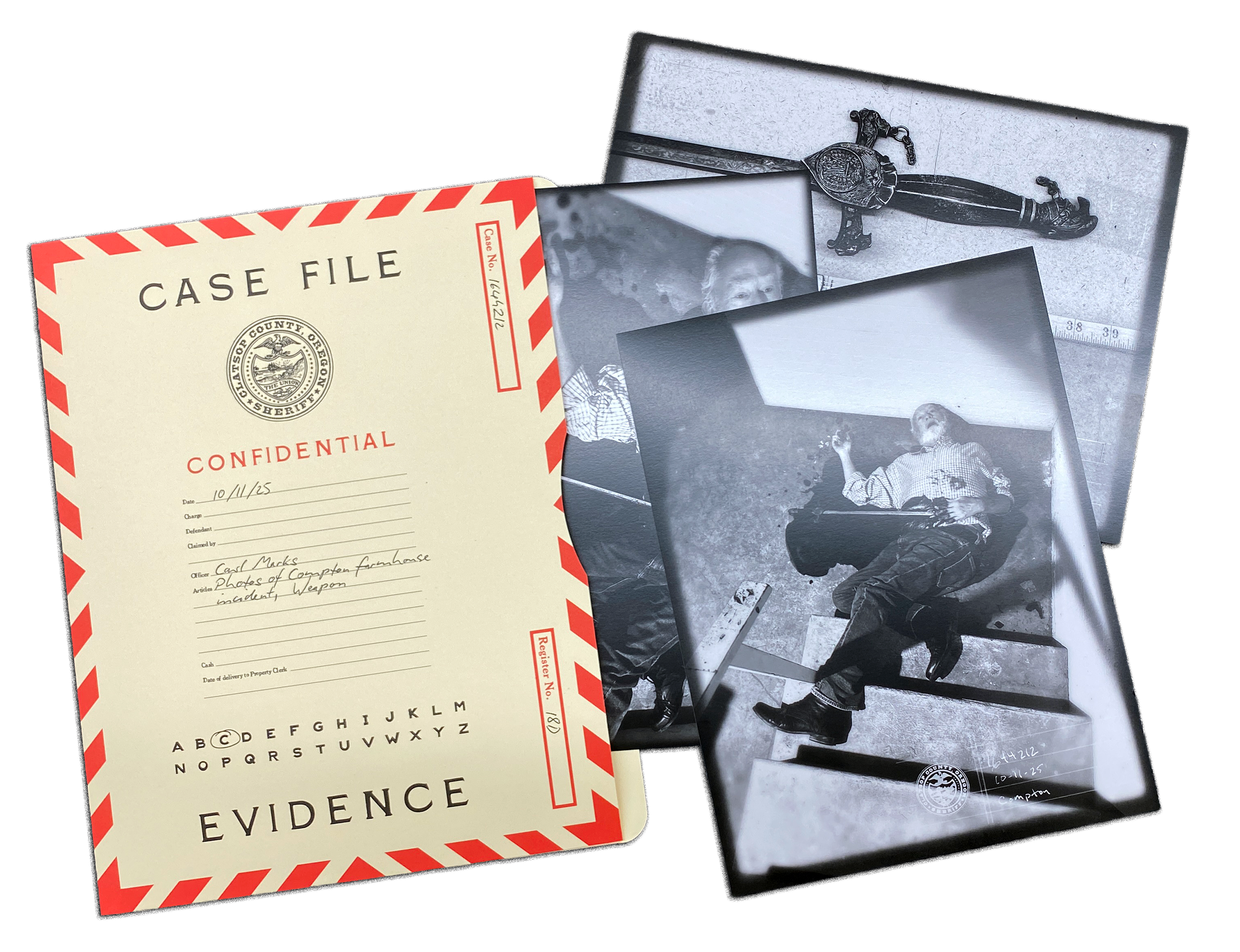 Clatsop County Sheriff's Deputy Carl Marks can show this official evidence file to Investigators who make a successful persuade roll. It contains two crime scene photos and one evidence photo showing the hilt of the ceremonial sword that caused Calvin's fatal wound.
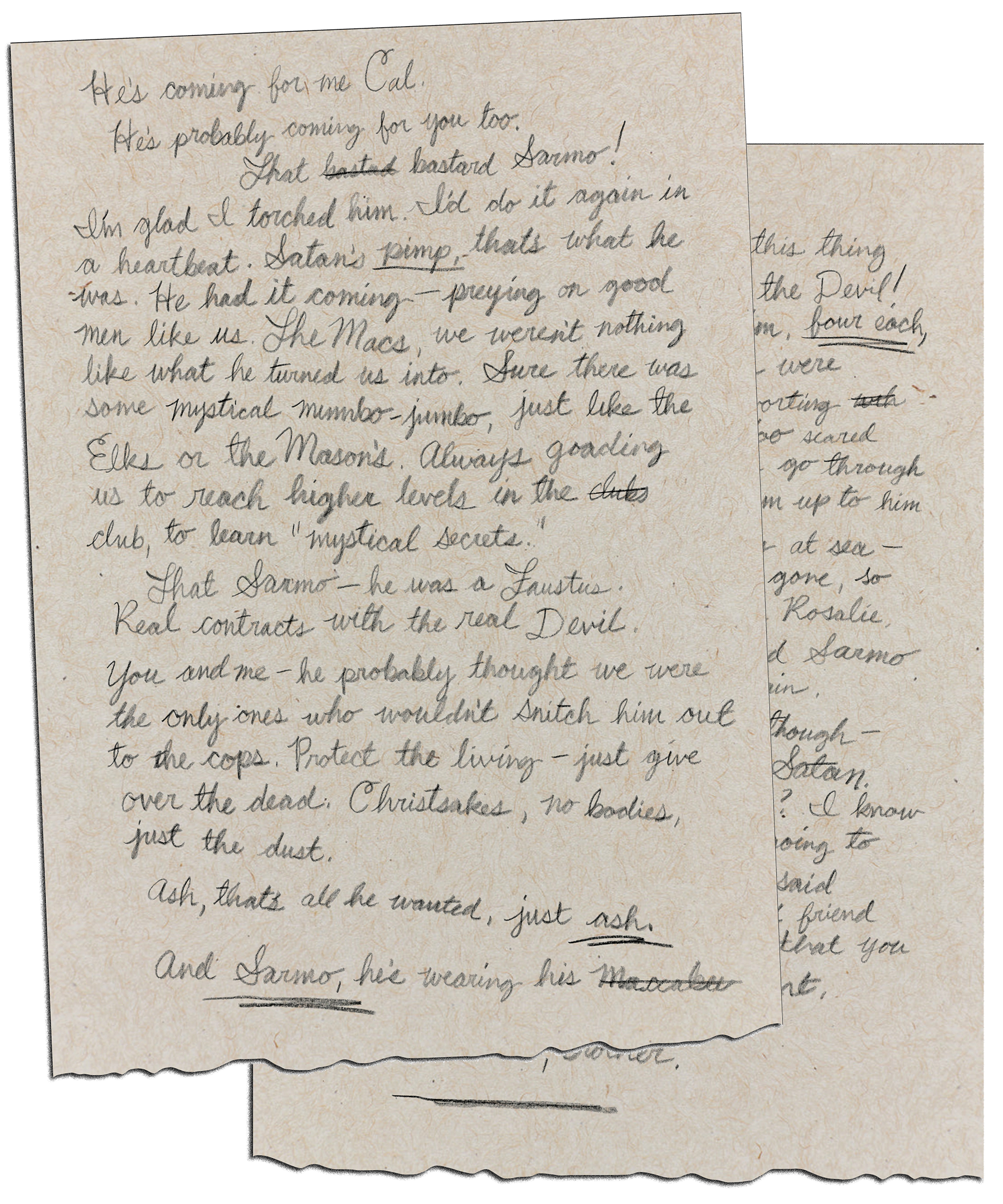 This ragged item was hastily written by the unfortunate Jack Jermayne shortly before his horrible death, and left in the hands of a fellow homeless man, Jerzy "Bobo" Bobrovsky. If the Investigators are kind to Bobo, or make a successful Persuade roll, he will give it to them. The prop has been intentionally distressed.
Special thanks to Tim Wong for his penmanship.
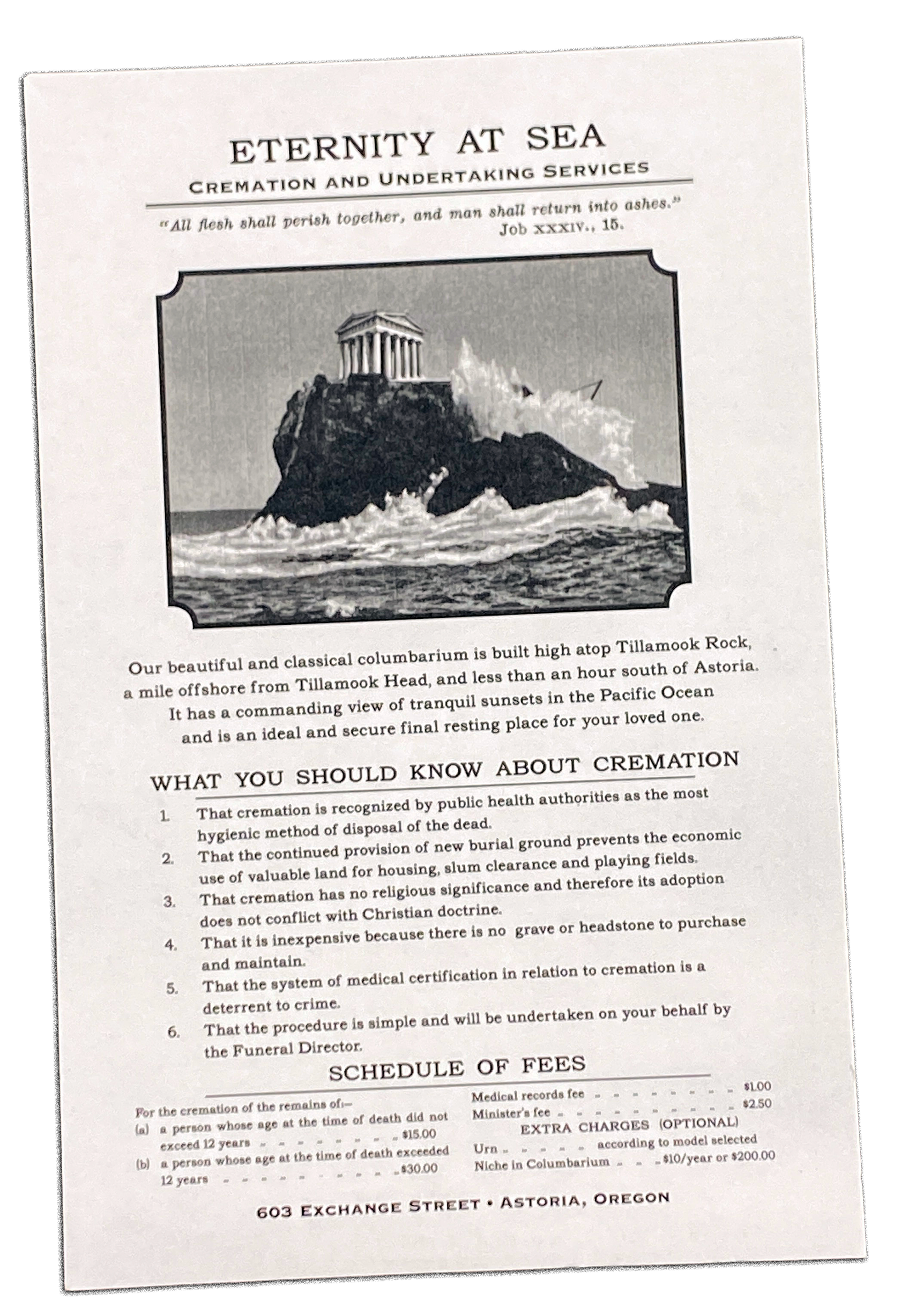 An informative, if uninspired, piece of marketing produced by Eternity at Sea to try to sell prospective customers on their columbarium as a place of eternal repose.
The Investigators can acquire this item directly from Elias Amole if they meet with him at his office to discuss the cremation of Calvin. If they don’t meet with him, they could also get it at the Mowbry Brothers funeral home, or possibly from Julius Irwindale if they ask him for help with making final arrangements for Calvin.
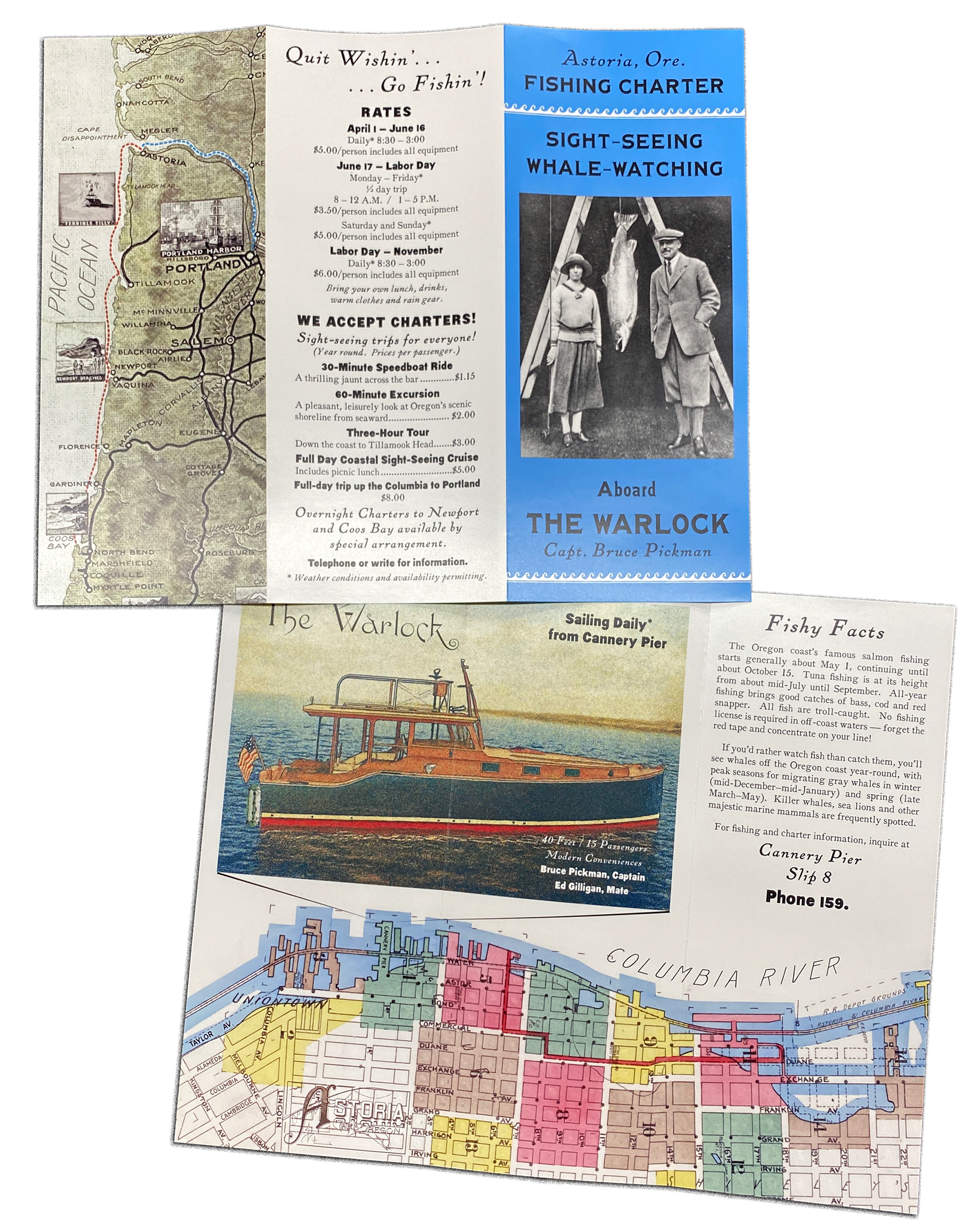 A color brochure from Capt. Bruce Pickman promoting charter trips available to Tillamook Rock on his boat The Warlock. In addition to information about boating, the brochure features maps of both downtown Astoria and the northern Oregon coast showing the relative locations of Astoria and Tillamook Rock.
The Investigators can acquire this item directly from Elias Amole if they meet with him at the Eternity at Sea office to discuss the cremation of Calvin. If they don’t meet with Amole, they could alternatively find this brochure in the tourist literature racks at the Hotel Astoria, the city’s newest and finest hotel, with a successful Spot Hidden roll. (It’s the kind of place where Carolyn and Phyllis might go for tea.) They could also readily find it in a display along with other charter boat brochures on the commercial wharves if they are looking for a way to visit Terrible Tilly.
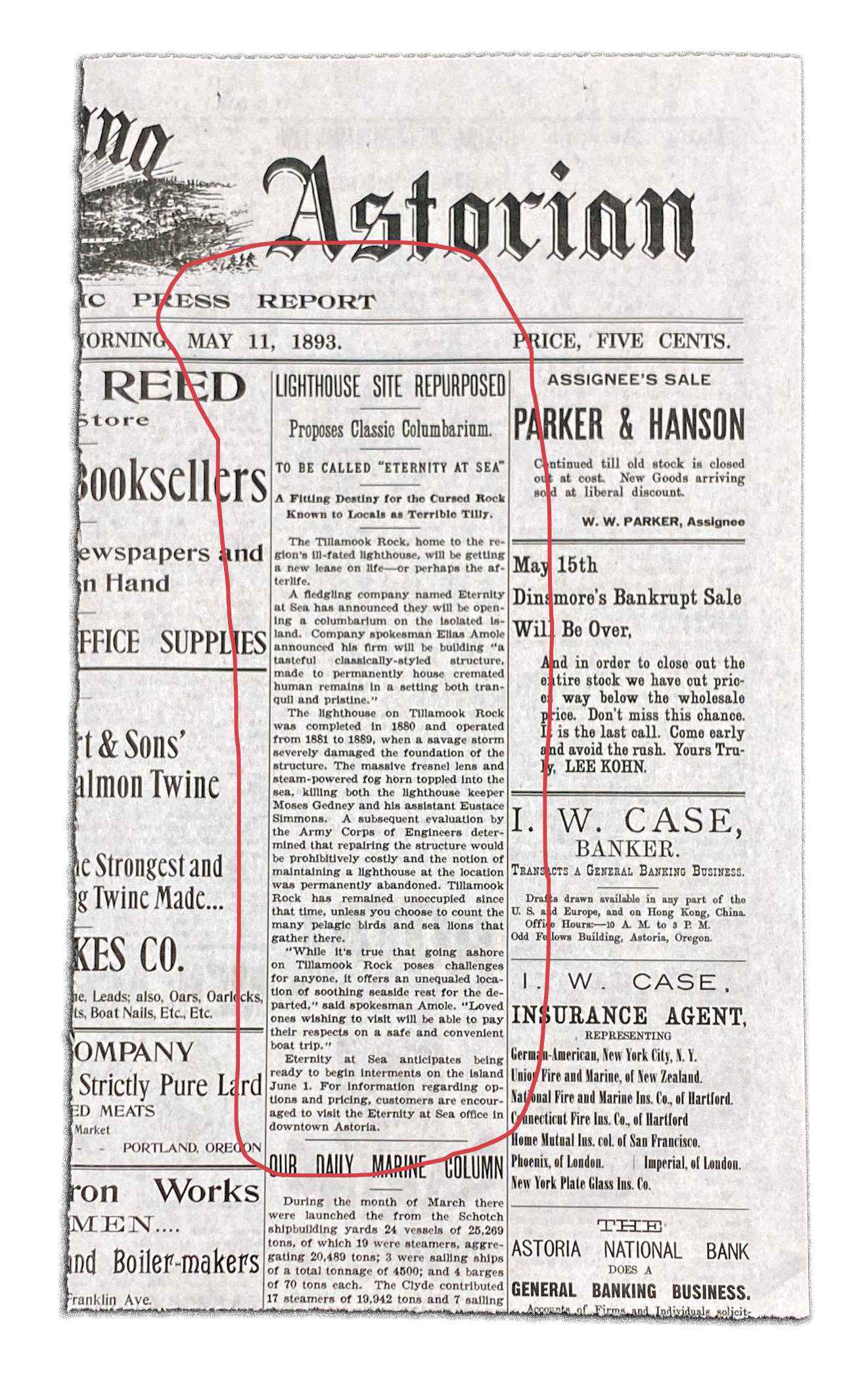 This item appears on the front page of The Daily Morning Astorian for May 11, 1893. Curious Investigators can find it at the library or in the morgue of the Astorian with a successful Library Use roll. The article tells the story of how the damaged Tillamook Rock lighthouse is going to be converted into a columbarium.
The Daily Morning Astorian was Astoria's other main newspaper, and it consisted mostly of ads and editorials, without a lot of news coverage. Originally published as just The Daily Astorian in 1876, it added "Morning" to its title and a fancy engraving of the town to its masthead in November of 1883.
Keepers can provide the entire quarter page of the U-Klip-It newspaper, which includes other items of historical context lifted from real Oregon newspapers of the day, or just the plot-specific article circled in red in this image.
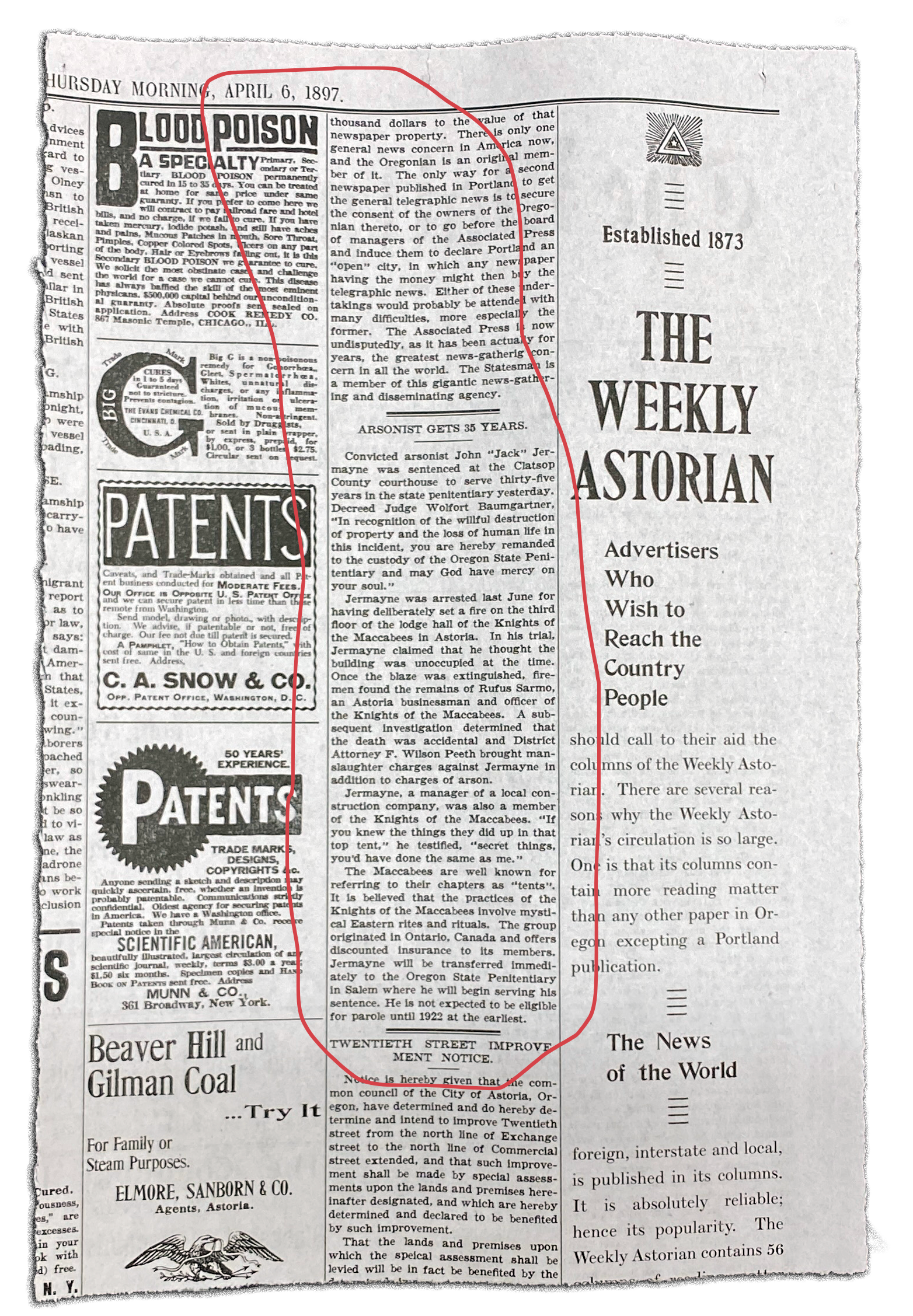 This item appears in The Daily Morning Astorian for April 6, 1897. Investigators can find it at the library or in the morgue of the Astorian with a successful library use roll. It reports that Jack Jermayne has been sentenced to 35 years in prison for arson and the resulting death of Rufus Sarmo. It points out that he will be eligible for parole in 1922.
Keepers can provide the entire quarter-page U-Klip-It piece, which provides additional articles and ads pulled from real Oregon newspapers of the time, or just the plot-specific article circled in red in this image.
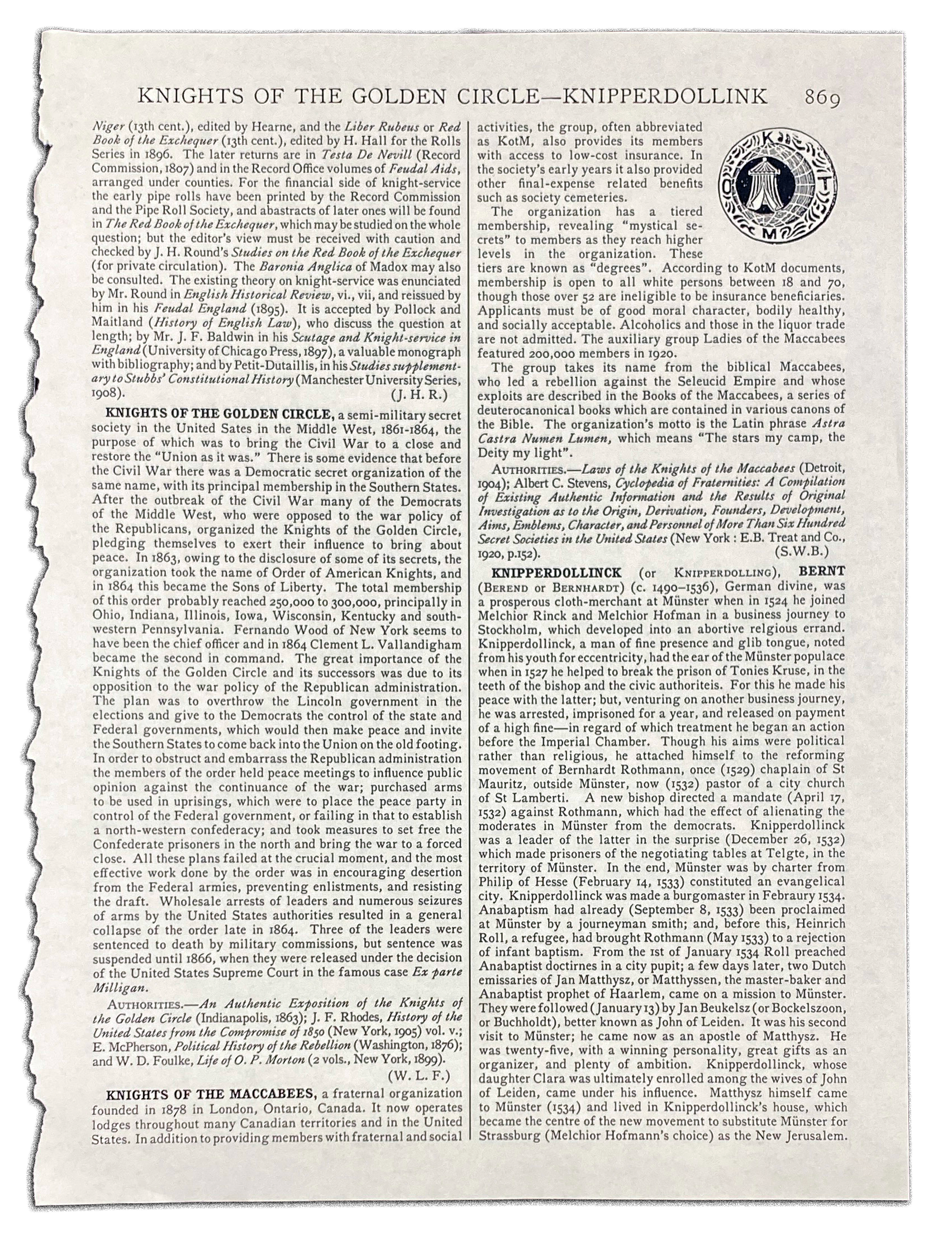 This item can be found in any copy of the Encyclopædia Britannica with a successful Library Use roll, or simply by knowing the order of the alphabet.
First published in Scotland in 1768, the Encyclopædia Britannica was the preeminent general knowledge encyclopedia of the 19th and 20th centuries. The current complete edition in 1925 was the 11th, which had been supplemented with a 12th edition in 1921 in response to the events of the Great War. A complete set had 29 volumes and was an expensive purchase. It is up to the Keeper if the Compton family owns a set, or if they have to go to the actual library to consult it.
Ownership of the Encyclopedia changed hands a number of times over its history, and by the mid-1920s it was actually owned by the American department store chain Sears Roebuck. They stopped printing physical copies of the encyclopedia in 2010, and is now only published digitally. We added the article about the Knights of the Maccabees, but all of the other articles in this prop are the real thing. You might learn something about knitting!
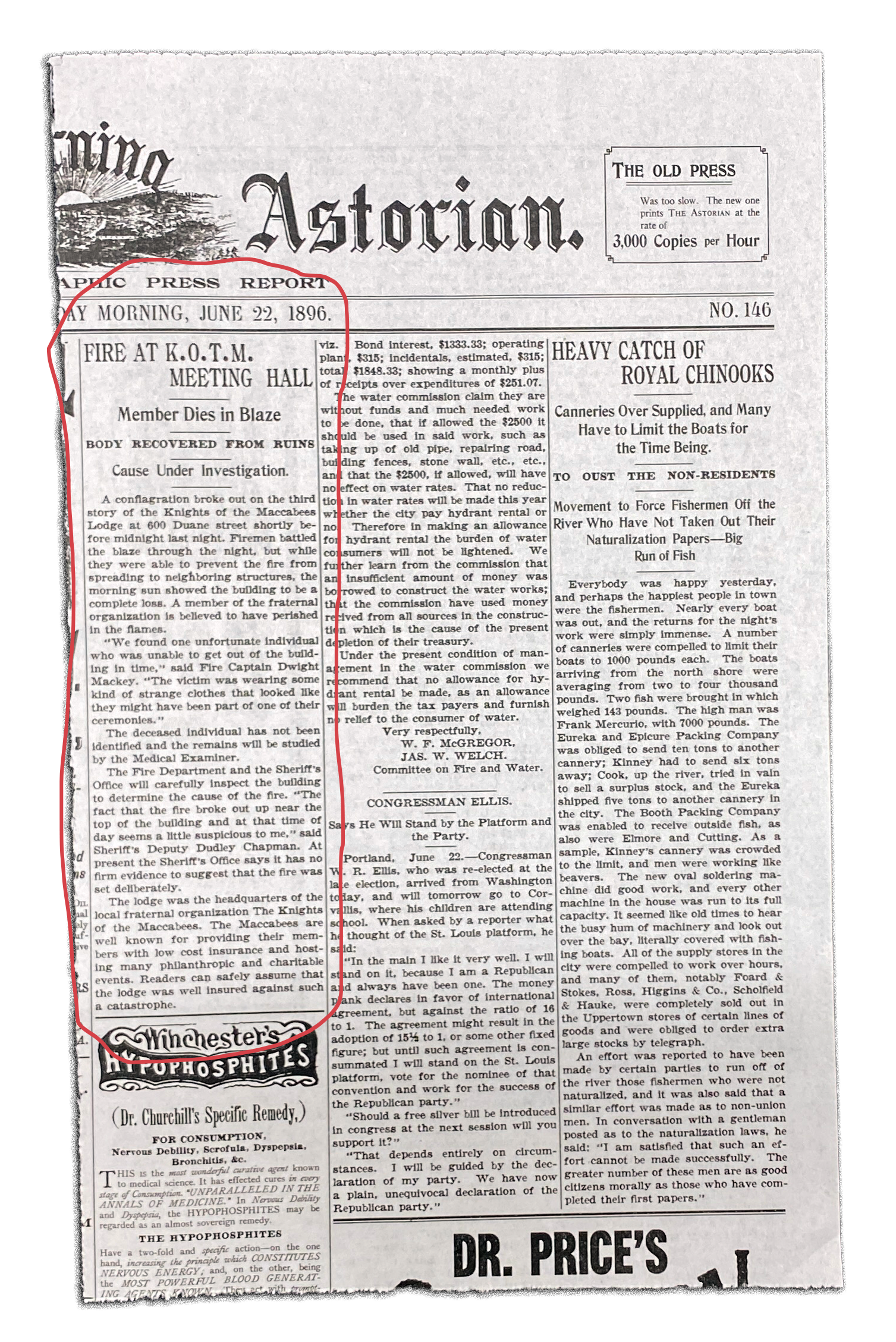 This item appears on the front page of The Daily Morning Astorian for June 22, 1896. Investigators can find it at the library or in the morgue of the Astorian with a successful Library Use roll. It reports on the mysterious fire that destroyed the Knights of the Maccabees lodge and left one person dead.
The Keeper can provide the entire quarter-page U-Klip-It item, or just the plot-specific column circled in red in this image.
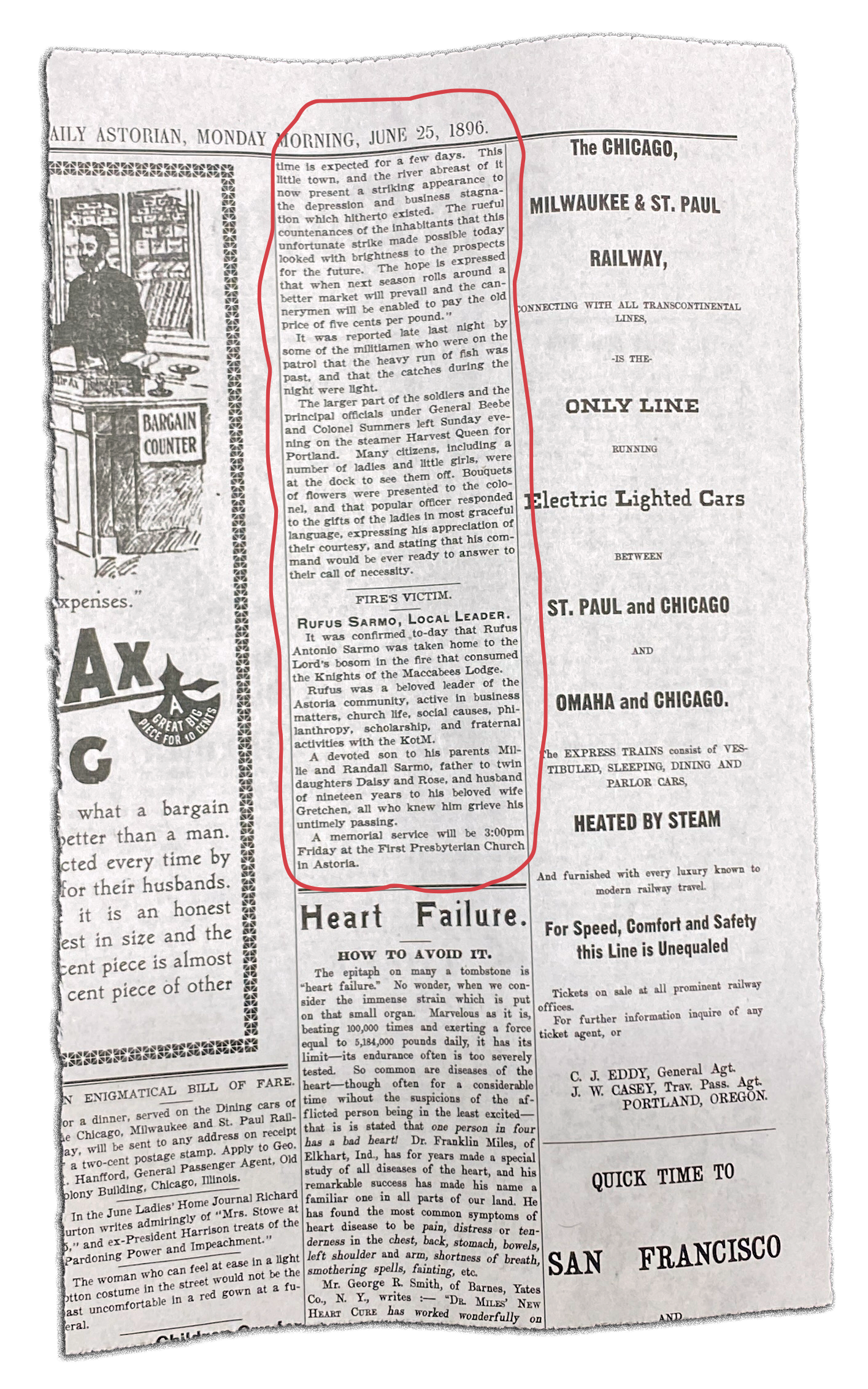 This brief item appears in The Daily Morning Astorian for June 25, 1896. While knowing more about Rufus Sarmo doesn’t necessarily bring a big payoff to the game, this items clarifies his role as a high-level Maccabee and a local respectable business leader. It does not, however, give any indication of his true purposes in conjuring an ash-eating revenant in his personal quest for power. Investigators can find it with a successful Library Use roll.
The Keeper can provide the entire quarter-page U-Klip-It item, or just the column circled in red in this image.
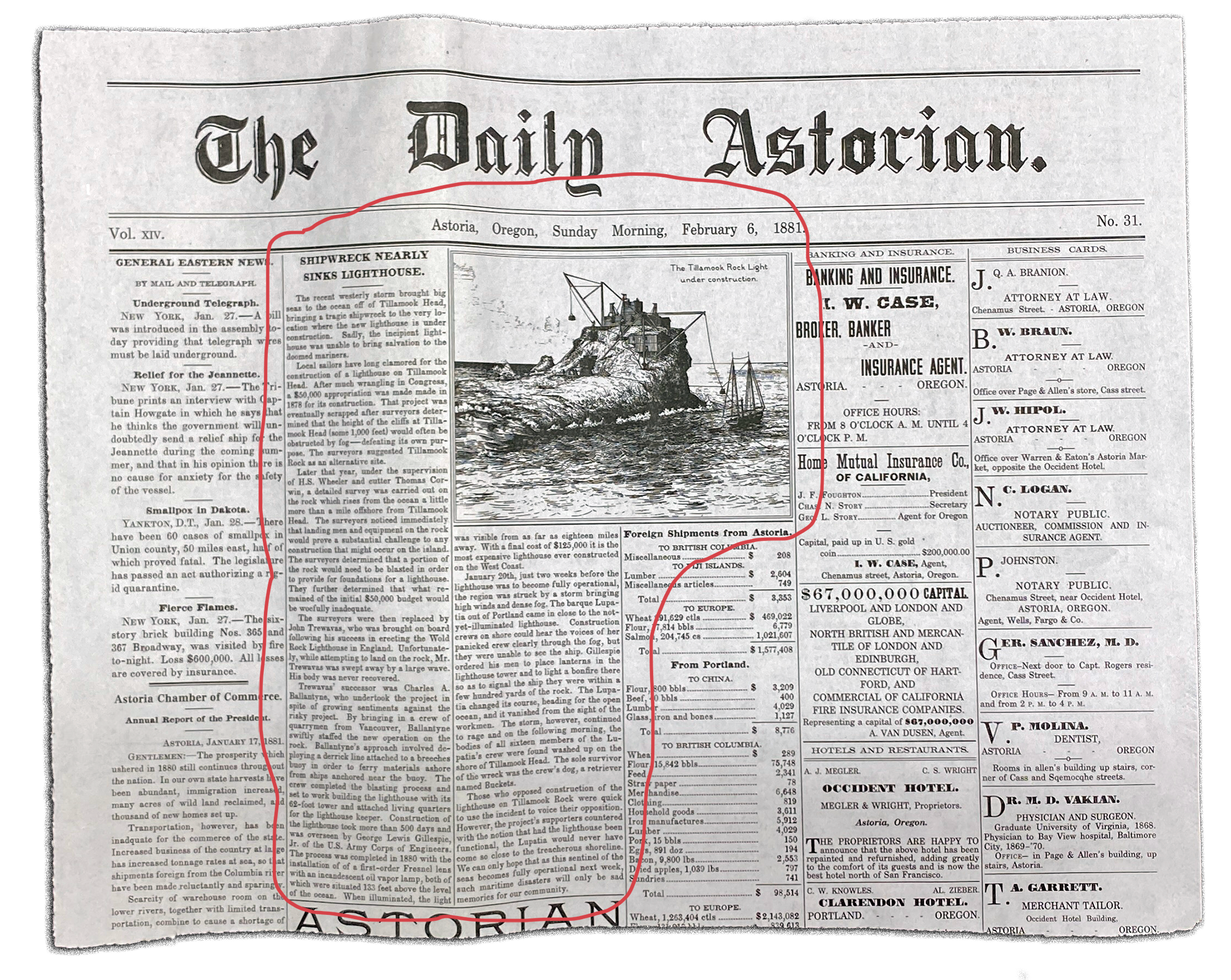 This item appears on the front page of The Daily Astorian for February 6, 1881, accompanied by an engraving of the Tillamook Rock Lighthouse under construction. Investigators curious to learn more about Tillamook Rock and Eternity at Sea can find it at the library or in the morgue of the Astorian with a successful Library Use roll.
Printing illustrations in small-town newspapers was highly unusual in 1881, and no such picture ever appeared in any actual Astoria newspaper at the time. But the information in the article is otherwise all true. The Lupatia was a real ship that was wrecked while the lighthouse was under construction, and the dog really was the only survivor.
The Keeper can provide the entire half-page U-Klip-It item, or just the material circled in red in this image.
 We have produced a set of nine audio props and four audio atmospheres for use with Eternity at Sea.
The audio props are interactions with a number of the NPCs in the game, produced with professional actors and sound effects. The atmospheres are loopable sound files for use when the Investigators are approaching Terrible Tilly. One features the sound of the boat ride aboard The Warlock, and others feature sounds from the cellar of Eternity at Sea and from Tillamook Rock.
The mp3 files are all available from the Eternity at Sea downloads page.
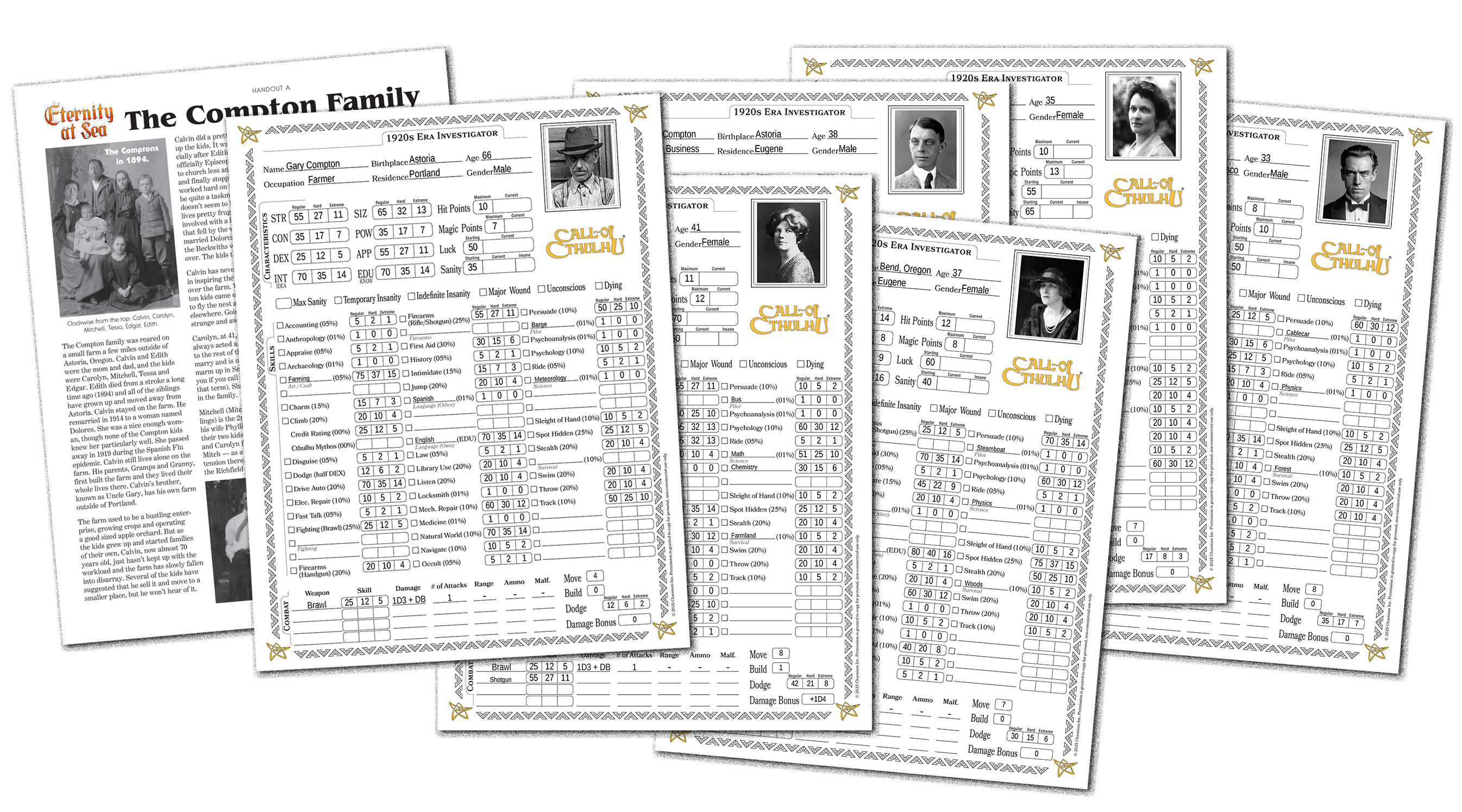 We have provided six pre-generated Investigator characters for use in the game. Your players can, of course, roll up their own characters, but the Investigators of this particular story are all meant to be members of the same family, with a shared history and built-in connections. We include six copies of a handout detailing the family history and providing some old photos, along with a color map showing the relation of the family homestead to the town of Astoria.

The H.P. Lovecraft Historical Society is an international organization for fans of the author H.P. Lovecraft. The Society produces motion pictures, audio dramas, musical projects, publications, prop replicas and much more - all of which take Lovecraft’s creations to a whole new level. Our motto is "Ludo Fore Putavimus" (We Thought It Would be Fun).
Useful Links
Contact Us
Glendale, CA 91201
U.S.A.
Phone: (747) 215-6422
Email: keeper@cthulhulives.org
1984–2026 © HPLHS; All Rights Reserved. Privacy Policy | Terms of Service